
 Biology
79 calculators
13 chapters
Biology calculators support common classroom and lab problems: measurements, cell biology, genetics, ecology, photosynthesis, and health-related biology math. Use this section when the problem mixes concepts with unit conversions, percentages, rates, or population data.
Biology
79 calculators
13 chapters
Biology calculators support common classroom and lab problems: measurements, cell biology, genetics, ecology, photosynthesis, and health-related biology math. Use this section when the problem mixes concepts with unit conversions, percentages, rates, or population data.
Calculator directory
Find the right STEM calculator by subject, chapter, or topic
Use the directory to choose a subject, scan its chapter coverage, or search across calculators and questions when you already know the formula or concept.
- 1,261
- calculators
- 16
- subjects
- 141
- chapters
Where to start
Choose by the problem you are solving
Chemistry homework or lab math
Stoichiometry, solutions, thermochemistry, gases, equilibrium, and acid-base tools.
Forces, motion, energy, or waves
Start with mechanics, then move into electricity, optics, thermodynamics, or modern physics.
Math derivations and checks
Algebra, calculus, geometry, probability, statistics, and linear algebra calculators.
Study and classroom utilities
Grade, scheduling, list, calendar, and productivity tools for repeated student workflows.
All subjects
Browse the full calculator catalog
Biology
79 calculators
13 chapters
Biology calculators support common classroom and lab problems: measurements, cell biology, genetics, ecology, photosynthesis, and health-related biology math. Use this section when the problem mixes concepts with unit conversions, percentages, rates, or population data.
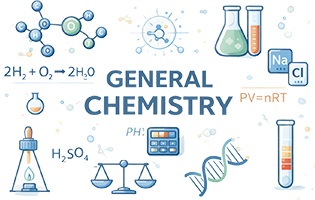 General Chemistry
152 calculators
17 chapters
General chemistry calculators cover the quantitative work behind chemistry courses: stoichiometry, molarity, gas laws, thermochemistry, equilibrium, acids and bases, electrochemistry, and lab measurements. These tools are useful when you need both the numeric answer and the formula path.
General Chemistry
152 calculators
17 chapters
General chemistry calculators cover the quantitative work behind chemistry courses: stoichiometry, molarity, gas laws, thermochemistry, equilibrium, acids and bases, electrochemistry, and lab measurements. These tools are useful when you need both the numeric answer and the formula path.
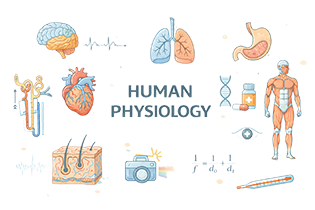 Human Physiology
91 calculators
11 chapters
Human physiology calculators focus on body systems, health metrics, circulation, respiration, nutrition, and practical biomedical math. They are designed for study support, not medical diagnosis, and help connect formulas with physiological interpretation.
Human Physiology
91 calculators
11 chapters
Human physiology calculators focus on body systems, health metrics, circulation, respiration, nutrition, and practical biomedical math. They are designed for study support, not medical diagnosis, and help connect formulas with physiological interpretation.
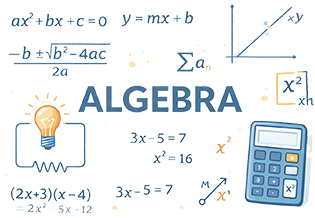 Math Algebra
109 calculators
10 chapters
Algebra calculators help with equations, functions, expressions, sequences, logarithms, polynomials, and rational expressions. Start here when you need to simplify a symbolic problem, verify intermediate steps, or prepare for calculus.
Math Algebra
109 calculators
10 chapters
Algebra calculators help with equations, functions, expressions, sequences, logarithms, polynomials, and rational expressions. Start here when you need to simplify a symbolic problem, verify intermediate steps, or prepare for calculus.
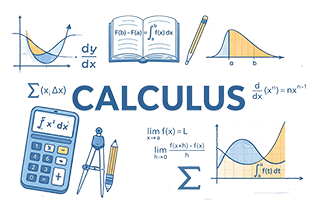 Math Calculus
72 calculators
8 chapters
Calculus calculators cover limits, derivatives, integrals, series, optimization, and applications. They are built for checking work while still showing the mathematical structure behind the result.
Math Calculus
72 calculators
8 chapters
Calculus calculators cover limits, derivatives, integrals, series, optimization, and applications. They are built for checking work while still showing the mathematical structure behind the result.
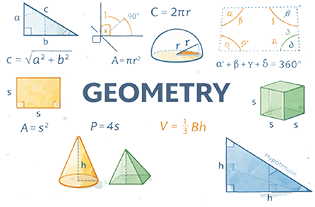 Math Geometry
98 calculators
7 chapters
Geometry calculators cover plane geometry, coordinate geometry, trigonometry, measurement, solids, and proofs-oriented relationships. Use them to check lengths, areas, angles, volumes, and geometric constraints.
Math Geometry
98 calculators
7 chapters
Geometry calculators cover plane geometry, coordinate geometry, trigonometry, measurement, solids, and proofs-oriented relationships. Use them to check lengths, areas, angles, volumes, and geometric constraints.
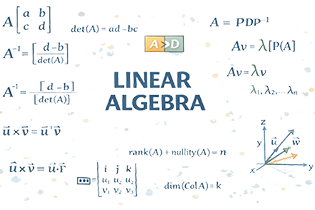 Math Linear Algebra
53 calculators
6 chapters
Linear algebra calculators focus on vectors, matrices, determinants, systems of equations, eigenvalues, transformations, and applied matrix methods. They are useful for engineering, data science, physics, and advanced math courses.
Math Linear Algebra
53 calculators
6 chapters
Linear algebra calculators focus on vectors, matrices, determinants, systems of equations, eigenvalues, transformations, and applied matrix methods. They are useful for engineering, data science, physics, and advanced math courses.
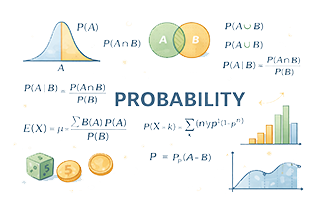 Math Probability
73 calculators
8 chapters
Probability calculators help with counting, distributions, expected value, conditional probability, Bayes' theorem, and random processes. Use them when the challenge is setting up the model as much as computing the number.
Math Probability
73 calculators
8 chapters
Probability calculators help with counting, distributions, expected value, conditional probability, Bayes' theorem, and random processes. Use them when the challenge is setting up the model as much as computing the number.
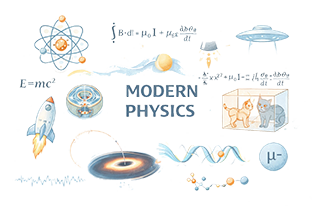 Modern Physics
54 calculators
6 chapters
Modern physics calculators cover relativity, quantum ideas, particles, radiation, nuclear physics, and cosmology previews. They help students handle formulas that are conceptually dense and unit-sensitive.
Modern Physics
54 calculators
6 chapters
Modern physics calculators cover relativity, quantum ideas, particles, radiation, nuclear physics, and cosmology previews. They help students handle formulas that are conceptually dense and unit-sensitive.
 Physics Classical Mechanics
129 calculators
11 chapters
Classical mechanics calculators cover motion, forces, work, energy, momentum, rotation, gravitation, fluids, and measurement. This is the right starting point for most introductory physics word problems.
Physics Classical Mechanics
129 calculators
11 chapters
Classical mechanics calculators cover motion, forces, work, energy, momentum, rotation, gravitation, fluids, and measurement. This is the right starting point for most introductory physics word problems.
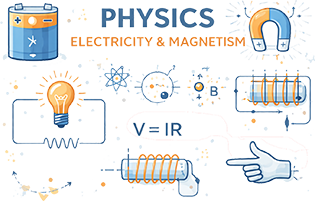 Physics Electricity and Magnetism
54 calculators
6 chapters
Electricity and magnetism calculators support circuits, fields, potential, capacitance, resistance, magnetism, induction, and waves in electrical systems. Use them to keep signs, units, and formulas organized.
Physics Electricity and Magnetism
54 calculators
6 chapters
Electricity and magnetism calculators support circuits, fields, potential, capacitance, resistance, magnetism, induction, and waves in electrical systems. Use them to keep signs, units, and formulas organized.
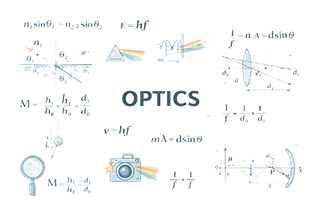 Physics Optics
54 calculators
6 chapters
Optics calculators cover reflection, refraction, mirrors, lenses, interference, diffraction, and light behavior. They help convert diagrams and sign conventions into reliable calculations.
Physics Optics
54 calculators
6 chapters
Optics calculators cover reflection, refraction, mirrors, lenses, interference, diffraction, and light behavior. They help convert diagrams and sign conventions into reliable calculations.
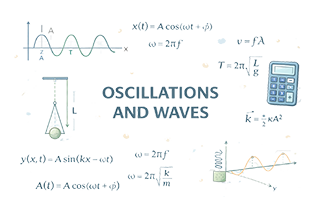 Physics Oscillations and Waves
54 calculators
6 chapters
Oscillations and waves calculators focus on periodic motion, springs, pendulums, sound, wave speed, resonance, and harmonic behavior. Use them when timing, frequency, wavelength, and amplitude relationships matter.
Physics Oscillations and Waves
54 calculators
6 chapters
Oscillations and waves calculators focus on periodic motion, springs, pendulums, sound, wave speed, resonance, and harmonic behavior. Use them when timing, frequency, wavelength, and amplitude relationships matter.
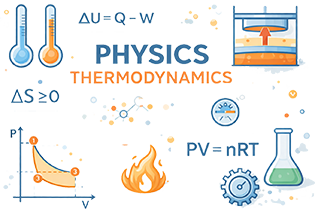 Physics Thermodynamics
43 calculators
5 chapters
Thermodynamics calculators cover heat, temperature, gases, energy transfer, engines, entropy, and thermal processes. They are useful for checking state variables and understanding which law applies.
Physics Thermodynamics
43 calculators
5 chapters
Thermodynamics calculators cover heat, temperature, gases, energy transfer, engines, entropy, and thermal processes. They are useful for checking state variables and understanding which law applies.
 Statistics
83 calculators
14 chapters
Statistics calculators cover descriptive statistics, probability models, sampling, confidence intervals, hypothesis tests, regression, ANOVA, and nonparametric methods. Use them to verify both results and interpretation.
Statistics
83 calculators
14 chapters
Statistics calculators cover descriptive statistics, probability models, sampling, confidence intervals, hypothesis tests, regression, ANOVA, and nonparametric methods. Use them to verify both results and interpretation.
 Tools and Utilities
63 calculators
7 chapters
Tools and utilities include practical calculators for grades, study planning, scheduling, text processing, lists, calendars, taxes, and classroom workflows. This section supports the work around STEM learning, not only the formulas inside it.
Tools and Utilities
63 calculators
7 chapters
Tools and utilities include practical calculators for grades, study planning, scheduling, text processing, lists, calendars, taxes, and classroom workflows. This section supports the work around STEM learning, not only the formulas inside it.
No matching subjects. Press Search All to search the full site.
Subject guide
What each calculator section is useful for
These notes are written to help students and search engines understand what is inside each subject area before opening a calculator.
Biology calculators
Biology calculators support common classroom and lab problems: measurements, cell biology, genetics, ecology, photosynthesis, and health-related biology math. Use this section when the problem mixes concepts with unit conversions, percentages, rates, or population data.
Best for
- lab reports and biology data analysis
- genetics and ecology practice
- cell structure, transport, and physiology checks
General Chemistry calculators
General chemistry calculators cover the quantitative work behind chemistry courses: stoichiometry, molarity, gas laws, thermochemistry, equilibrium, acids and bases, electrochemistry, and lab measurements. These tools are useful when you need both the numeric answer and the formula path.
Best for
- stoichiometry and solution preparation
- gas, equilibrium, and pH calculations
- lab measurement and unit conversion checks
Human Physiology calculators
Human physiology calculators focus on body systems, health metrics, circulation, respiration, nutrition, and practical biomedical math. They are designed for study support, not medical diagnosis, and help connect formulas with physiological interpretation.
Best for
- health science coursework
- nutrition and body metric estimates
- cardiovascular, respiratory, and dosage-style practice
Math Algebra calculators
Algebra calculators help with equations, functions, expressions, sequences, logarithms, polynomials, and rational expressions. Start here when you need to simplify a symbolic problem, verify intermediate steps, or prepare for calculus.
Best for
- equation solving and expression checks
- function and graph interpretation
- polynomial, rational, and sequence problems
Explore first
Math Calculus calculators
Calculus calculators cover limits, derivatives, integrals, series, optimization, and applications. They are built for checking work while still showing the mathematical structure behind the result.
Best for
- derivative and integral verification
- limits, series, and approximation
- optimization and applied rate problems
Explore first
Math Geometry calculators
Geometry calculators cover plane geometry, coordinate geometry, trigonometry, measurement, solids, and proofs-oriented relationships. Use them to check lengths, areas, angles, volumes, and geometric constraints.
Best for
- area, volume, and angle problems
- coordinate geometry and trigonometry
- solid geometry and measurement review
Math Linear Algebra calculators
Linear algebra calculators focus on vectors, matrices, determinants, systems of equations, eigenvalues, transformations, and applied matrix methods. They are useful for engineering, data science, physics, and advanced math courses.
Best for
- matrix operations and systems
- vector spaces and transformations
- eigenvalue and application checks
Math Probability calculators
Probability calculators help with counting, distributions, expected value, conditional probability, Bayes' theorem, and random processes. Use them when the challenge is setting up the model as much as computing the number.
Best for
- distribution and expected-value practice
- conditional probability and Bayes checks
- combinatorics and counting problems
Modern Physics calculators
Modern physics calculators cover relativity, quantum ideas, particles, radiation, nuclear physics, and cosmology previews. They help students handle formulas that are conceptually dense and unit-sensitive.
Best for
- quantum and nuclear physics review
- relativity and radiation formulas
- particle and cosmology concept checks
Physics Classical Mechanics calculators
Classical mechanics calculators cover motion, forces, work, energy, momentum, rotation, gravitation, fluids, and measurement. This is the right starting point for most introductory physics word problems.
Best for
- kinematics and Newton's laws
- energy, momentum, and collisions
- rotation, fluids, and measurement problems
Explore first
Physics Electricity and Magnetism calculators
Electricity and magnetism calculators support circuits, fields, potential, capacitance, resistance, magnetism, induction, and waves in electrical systems. Use them to keep signs, units, and formulas organized.
Best for
- circuit and Ohm's law checks
- electric fields and potential
- magnetism and induction problems
Physics Optics calculators
Optics calculators cover reflection, refraction, mirrors, lenses, interference, diffraction, and light behavior. They help convert diagrams and sign conventions into reliable calculations.
Best for
- lens and mirror equations
- refraction and Snell's law
- interference, diffraction, and wave optics
Physics Oscillations and Waves calculators
Oscillations and waves calculators focus on periodic motion, springs, pendulums, sound, wave speed, resonance, and harmonic behavior. Use them when timing, frequency, wavelength, and amplitude relationships matter.
Best for
- spring and pendulum problems
- wave speed and sound calculations
- frequency, period, and resonance checks
Physics Thermodynamics calculators
Thermodynamics calculators cover heat, temperature, gases, energy transfer, engines, entropy, and thermal processes. They are useful for checking state variables and understanding which law applies.
Best for
- heat and temperature conversions
- gas laws and thermal processes
- work, efficiency, and entropy practice
Statistics calculators
Statistics calculators cover descriptive statistics, probability models, sampling, confidence intervals, hypothesis tests, regression, ANOVA, and nonparametric methods. Use them to verify both results and interpretation.
Best for
- summary statistics and distributions
- confidence intervals and hypothesis tests
- regression and data-analysis checks
Explore first
Tools and Utilities calculators
Tools and utilities include practical calculators for grades, study planning, scheduling, text processing, lists, calendars, taxes, and classroom workflows. This section supports the work around STEM learning, not only the formulas inside it.
Best for
- grade and study planning
- classroom organization and scheduling
- text, list, calendar, and tax utilities