
 Biology
79 questions
41 topics
Biology questions cover lab math, cell biology, genetics, ecology, microbiology, evolution, and physiology. Use this section when you need concept explanations tied to data, diagrams, inheritance patterns, or experimental results.
Biology
79 questions
41 topics
Biology questions cover lab math, cell biology, genetics, ecology, microbiology, evolution, and physiology. Use this section when you need concept explanations tied to data, diagrams, inheritance patterns, or experimental results.
STEM question library
Find explained answers by subject, chapter, and topic
Browse direct STEM explanations for chemistry, physics, biology, math, statistics, and study-tool questions. Use the subject cards to find a course area, then open topics for focused answers.
- 770
- questions
- 9
- subjects
- 221
- topics
How to use this page
Start with the kind of answer you need
Formula-backed answer
Use chemistry and physics topics when the question depends on units, formulas, or diagrams.
Step-by-step reasoning
Use math sections to see how equations, sequences, graphs, and probability setups are explained.
Concept explanation
Use biology and physiology questions for definitions, mechanisms, lab interpretation, and examples.
Need a numeric check?
Open the calculator directory when you want to verify the arithmetic behind an answer.
All question subjects
Browse questions by STEM subject
Biology
79 questions
41 topics
Biology questions cover lab math, cell biology, genetics, ecology, microbiology, evolution, and physiology. Use this section when you need concept explanations tied to data, diagrams, inheritance patterns, or experimental results.
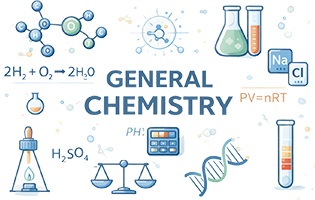 General Chemistry
462 questions
93 topics
General chemistry questions explain atomic structure, compounds, stoichiometry, thermochemistry, bonding, solutions, equilibrium, acids and bases, and lab concepts. This is the strongest section for formula-backed chemistry answers and common homework misconceptions.
General Chemistry
462 questions
93 topics
General chemistry questions explain atomic structure, compounds, stoichiometry, thermochemistry, bonding, solutions, equilibrium, acids and bases, and lab concepts. This is the strongest section for formula-backed chemistry answers and common homework misconceptions.
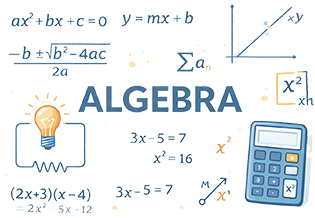 Math Algebra
89 questions
23 topics
Algebra questions focus on equations, expressions, functions, sequences, graph interpretation, polynomials, rational expressions, and symbolic reasoning. Use this section to see how a problem is set up before checking a final answer.
Math Algebra
89 questions
23 topics
Algebra questions focus on equations, expressions, functions, sequences, graph interpretation, polynomials, rational expressions, and symbolic reasoning. Use this section to see how a problem is set up before checking a final answer.
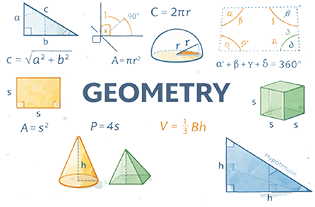 Math Geometry
5 questions
3 topics
Geometry questions cover shapes, triangles, coordinate geometry, area, volume, angles, transformations, and geometric formulas. Use this section when a diagram, property, or formula choice is the main challenge.
Math Geometry
5 questions
3 topics
Geometry questions cover shapes, triangles, coordinate geometry, area, volume, angles, transformations, and geometric formulas. Use this section when a diagram, property, or formula choice is the main challenge.
 Physics Classical Mechanics
13 questions
8 topics
Classical mechanics questions cover motion, Newton's laws, forces, energy, momentum, rotation, gravitation, fluids, and measurement. Start here for most introductory physics word problems.
Physics Classical Mechanics
13 questions
8 topics
Classical mechanics questions cover motion, Newton's laws, forces, energy, momentum, rotation, gravitation, fluids, and measurement. Start here for most introductory physics word problems.
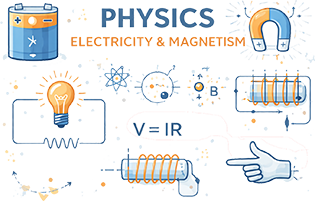 Physics Electricity and Magnetism
1 questions
1 topics
Electricity and magnetism questions explain circuits, fields, potential, resistance, capacitance, magnetism, and induction. The content helps organize signs, units, diagrams, and formula choices.
Physics Electricity and Magnetism
1 questions
1 topics
Electricity and magnetism questions explain circuits, fields, potential, resistance, capacitance, magnetism, and induction. The content helps organize signs, units, diagrams, and formula choices.
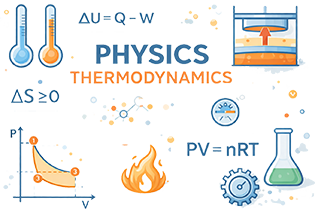 Physics Thermodynamics
2 questions
2 topics
Thermodynamics questions cover heat, temperature, gases, work, efficiency, entropy, engines, and thermal processes. Use this section to decide which state variables and laws apply.
Physics Thermodynamics
2 questions
2 topics
Thermodynamics questions cover heat, temperature, gases, work, efficiency, entropy, engines, and thermal processes. Use this section to decide which state variables and laws apply.
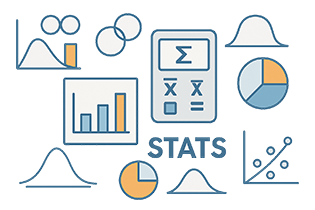 Statistics
109 questions
46 topics
Statistics questions explain descriptive statistics, probability models, sampling, confidence intervals, hypothesis tests, regression, ANOVA, and nonparametric methods. They focus on interpretation as much as computation.
Statistics
109 questions
46 topics
Statistics questions explain descriptive statistics, probability models, sampling, confidence intervals, hypothesis tests, regression, ANOVA, and nonparametric methods. They focus on interpretation as much as computation.
 Tools and Utilities
10 questions
4 topics
Tools and utilities questions answer practical problems around grades, time, scheduling, randomization, lists, text, calendars, and classroom workflows. These are useful for quick everyday calculations and how-to explanations.
Tools and Utilities
10 questions
4 topics
Tools and utilities questions answer practical problems around grades, time, scheduling, randomization, lists, text, calendars, and classroom workflows. These are useful for quick everyday calculations and how-to explanations.
No matching subjects. Press Search All to search the full site.
Question guide
What each question area helps you answer
These summaries give search engines and answer engines a clear map of the question library, while helping students choose the right subject before opening a topic page.
Biology questions
Biology questions cover lab math, cell biology, genetics, ecology, microbiology, evolution, and physiology. Use this section when you need concept explanations tied to data, diagrams, inheritance patterns, or experimental results.
Best for
- genetics and Punnett-square reasoning
- biology lab report interpretation
- cell, ecology, and physiology concept checks
General Chemistry questions
General chemistry questions explain atomic structure, compounds, stoichiometry, thermochemistry, bonding, solutions, equilibrium, acids and bases, and lab concepts. This is the strongest section for formula-backed chemistry answers and common homework misconceptions.
Best for
- Lewis structures and bonding questions
- moles, molarity, pH, and stoichiometry
- thermochemistry and equilibrium explanations
Math Algebra questions
Algebra questions focus on equations, expressions, functions, sequences, graph interpretation, polynomials, rational expressions, and symbolic reasoning. Use this section to see how a problem is set up before checking a final answer.
Best for
- equation-solving explanations
- sequence and function questions
- algebra rules behind calculator results
Popular topics
Math Geometry questions
Geometry questions cover shapes, triangles, coordinate geometry, area, volume, angles, transformations, and geometric formulas. Use this section when a diagram, property, or formula choice is the main challenge.
Best for
- triangle and polygon formulas
- area, volume, and surface-area questions
- coordinate geometry and proof-style reasoning
Physics Classical Mechanics questions
Classical mechanics questions cover motion, Newton's laws, forces, energy, momentum, rotation, gravitation, fluids, and measurement. Start here for most introductory physics word problems.
Best for
- kinematics and force diagrams
- energy, momentum, and collision reasoning
- rotation, fluids, and measurement questions
Popular topics
Physics Electricity and Magnetism questions
Electricity and magnetism questions explain circuits, fields, potential, resistance, capacitance, magnetism, and induction. The content helps organize signs, units, diagrams, and formula choices.
Best for
- circuit analysis questions
- electric fields and potential
- magnetism and induction explanations
Popular topics
Physics Thermodynamics questions
Thermodynamics questions cover heat, temperature, gases, work, efficiency, entropy, engines, and thermal processes. Use this section to decide which state variables and laws apply.
Best for
- gas law and heat-transfer questions
- engine efficiency and work
- entropy and process interpretation
Popular topics
Statistics questions
Statistics questions explain descriptive statistics, probability models, sampling, confidence intervals, hypothesis tests, regression, ANOVA, and nonparametric methods. They focus on interpretation as much as computation.
Best for
- hypothesis-test interpretation
- confidence intervals and p-values
- regression and data-analysis questions
Tools and Utilities questions
Tools and utilities questions answer practical problems around grades, time, scheduling, randomization, lists, text, calendars, and classroom workflows. These are useful for quick everyday calculations and how-to explanations.
Best for
- grade and time questions
- study planning and classroom workflows
- text, list, randomizer, and calendar help
Answer quality
What makes a STEM answer useful?
Clear context
A good answer names the subject, topic, formula, and assumptions before solving. That helps students and answer engines distinguish similar-looking questions.
Steps before shortcuts
The explanation should show why a rule applies, not only the final number or definition. This is especially important for chemistry, physics, statistics, and calculus questions.
Verification path
When a question includes arithmetic, units, or formulas, use the related calculator pages to check the result and reduce copy-paste mistakes.
Questions directory FAQ
How the STEM question library is organized
What kinds of STEM questions are included?
The question library covers math, physics, chemistry, biology, statistics, human physiology, and study utilities. Questions are organized by subject, chapter, and topic so students can move from a broad course area to a specific concept.
How should I use the question pages with calculators?
Use question pages to understand the concept and calculator pages to verify numeric work. A good workflow is to read the explanation, identify the formula or rule, then check the result with the matching calculator when one is available.
Are these pages useful for answer engines and AI study tools?
The pages use clear subject context, direct answers, formulas, and related topic links. That structure helps search engines and AI answer systems understand what each question is about and when it is relevant.